The Invention That Lights the Way
The JLPER Theory is a 25-year multidisciplinary research connecting music, astronomy, and ancient Mesoamerican wisdom through a unified mathematical framework.
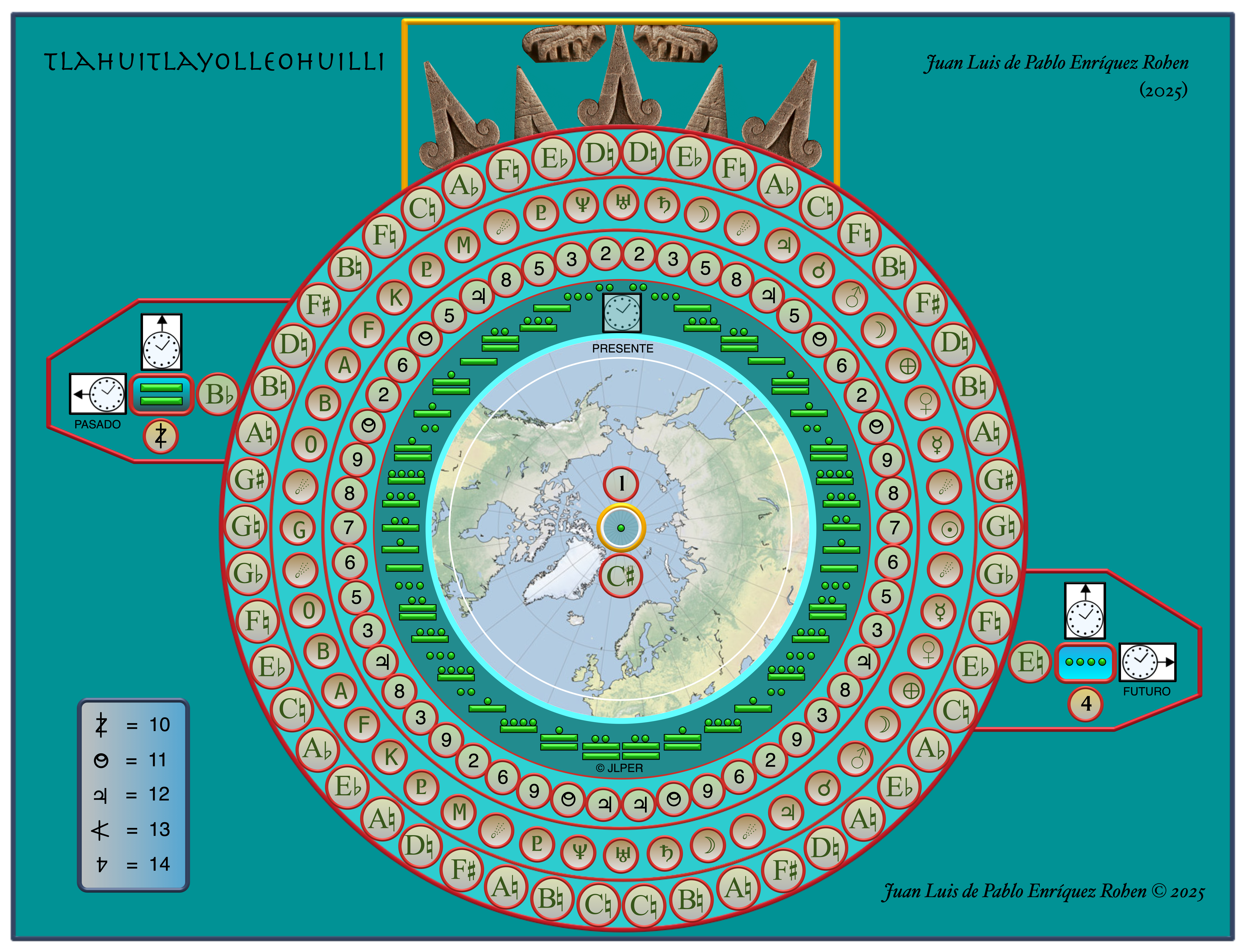
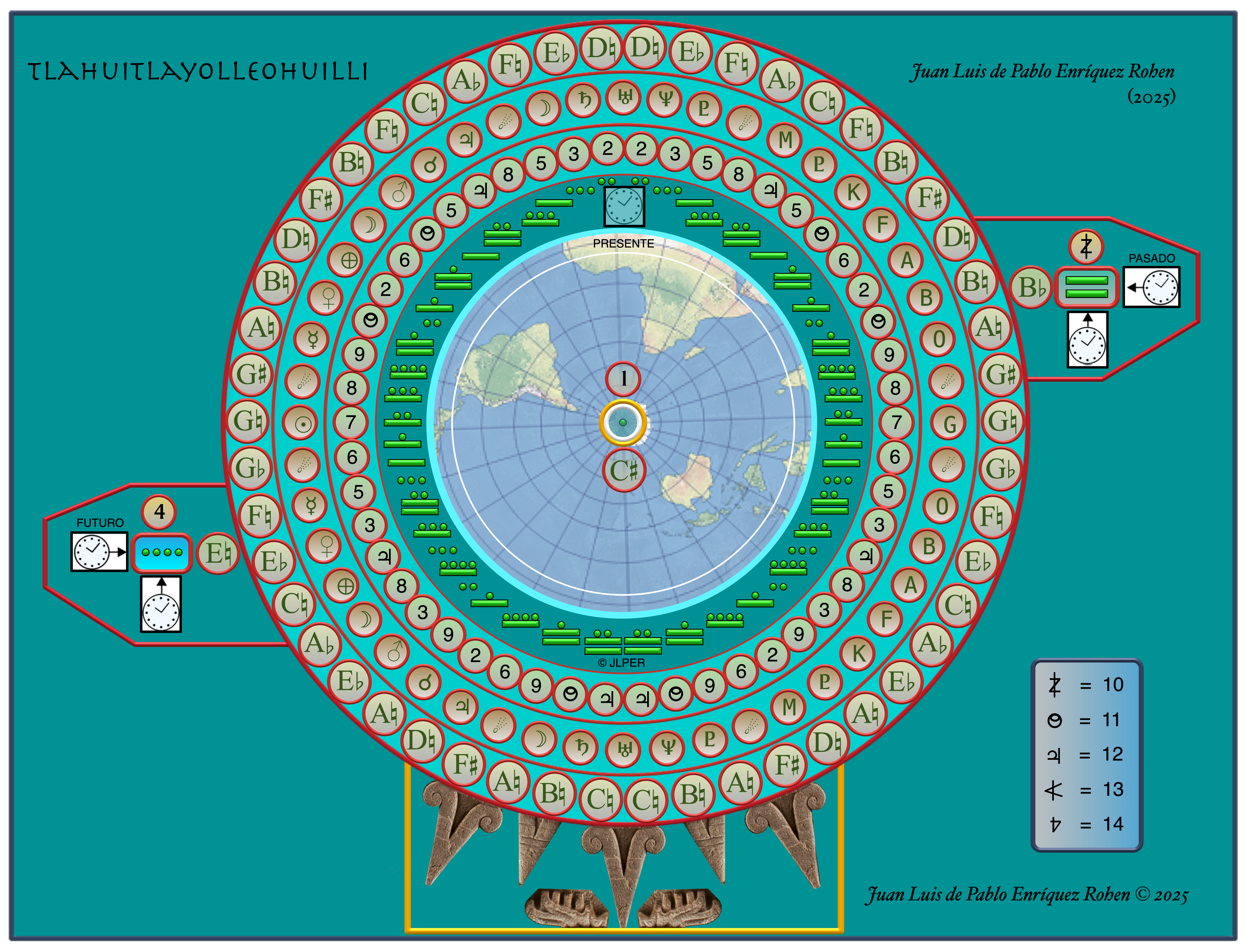

At its heart lies the "Tlahuitlayolleohuilli" — a Nahuatl word meaning "The Invention That Lights the Way" — a circular diagram revealing the hidden harmony between musical intervals and the cosmic order of our Solar System.
The Cosmic
Musical intervals arranged in ascending order form a closed circuit of 25 dual cosmic elements — each number corresponding to both a musical note and a celestial body.
Three additional numbers represent the Three Fates of Time — Past, Present, and Future — forming a perfectly symmetrical diminished chord at equal distances, just as described in Plato's Republic.
TLAHUITLAYOLLEOHUILLI · 2025
The Sacred Numbers
The mathematical precision of the Tlahuitlayolleohuilli reveals extraordinary cosmic coincidences:
- The sum of all digits = 365 — the days in a solar year
- Symmetrical pairs always add to 14 — the harmonic number of completion
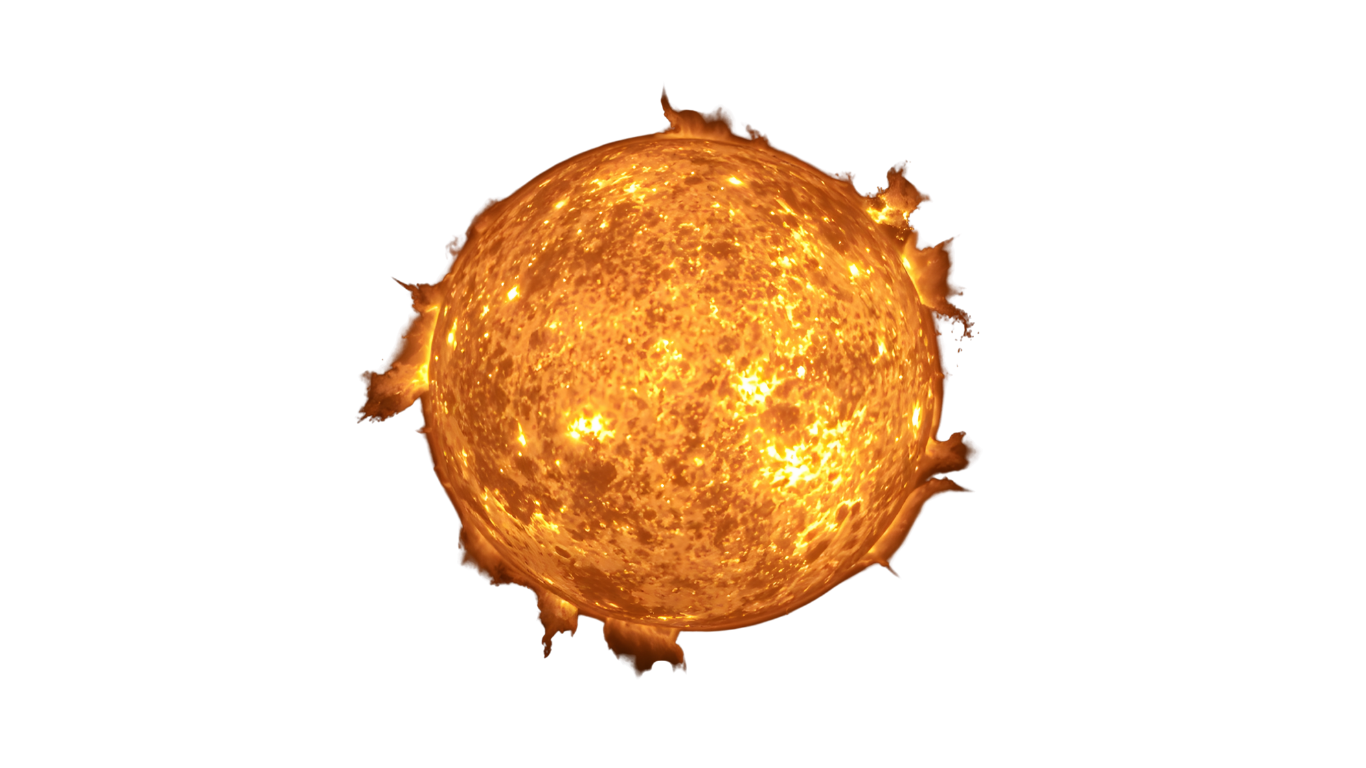
- The Sun's rotation = 25.3 days, matching the 25 dual elements
- The Sun's axial tilt = 7.25° — and 7 is the note G, central to the theory
- The age of the universe ≈ 14 billion years

The mayan Connection
Planets, Comets and Stars — All numbers encoded in the architecture
In 2004, a visit to the ancient Mayan city of Uxmal revealed an astonishing discovery: the number of doorways on each temple matched the cosmic numbers in the JLPER Theory.
- The Temple of the Sun: 7 doors on each side
- The Temple of Venus (Kukulkán): 11 apertures
- Stars, planets, and comets — all encoded in architecture
The Mayans had discovered the same cosmic sequence thousands of years ago.
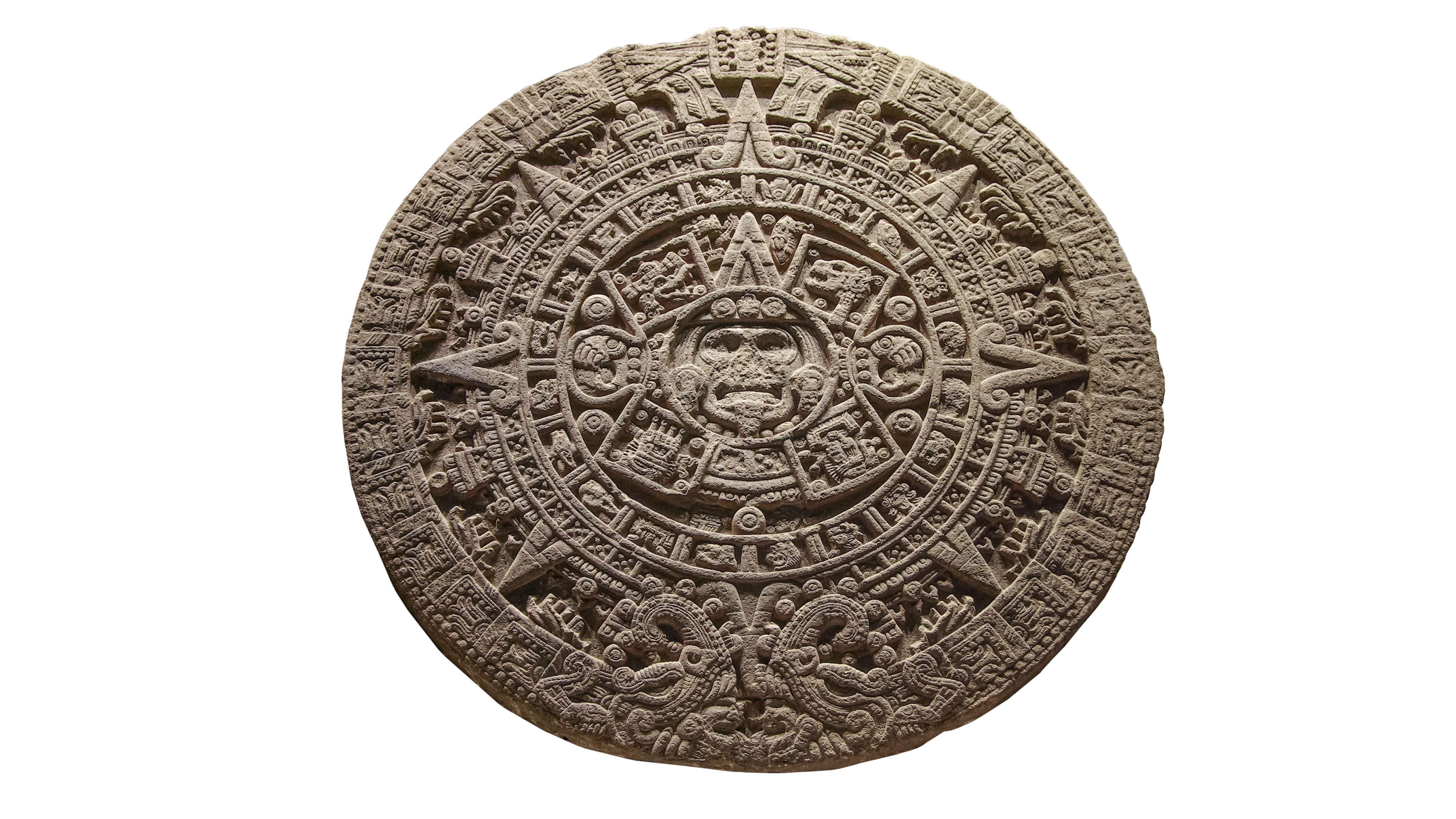
Deciphering the Sun Stone
The JLPER Theory provides the key to understanding the Aztec Sun Stone — revealing astronomical knowledge long hidden in plain sight:
- Solar flares depicted in the pictograms
- The precession of Earth (~26,000 years)
- Lunar cycles of 13,000 years
- Orbital data for Uranus
- Four mathematical operation symbols — addition, subtraction, multiplication, division — previously unidentified

As Above, So Below
The cosmic order is mirrored in the human body itself:
- The 26 vertebrae of the human spine correspond to the 25 elements of the Tlahuitlayolleohuilli + 1 (Present)
- DNA structure mirrors the three Fates of Time: 4 nucleotides, 1 strand, patterns of 10
- Both DNA chains and Tlahuitlayolleohuilli strings exhibit symmetrical mirroring and rotation
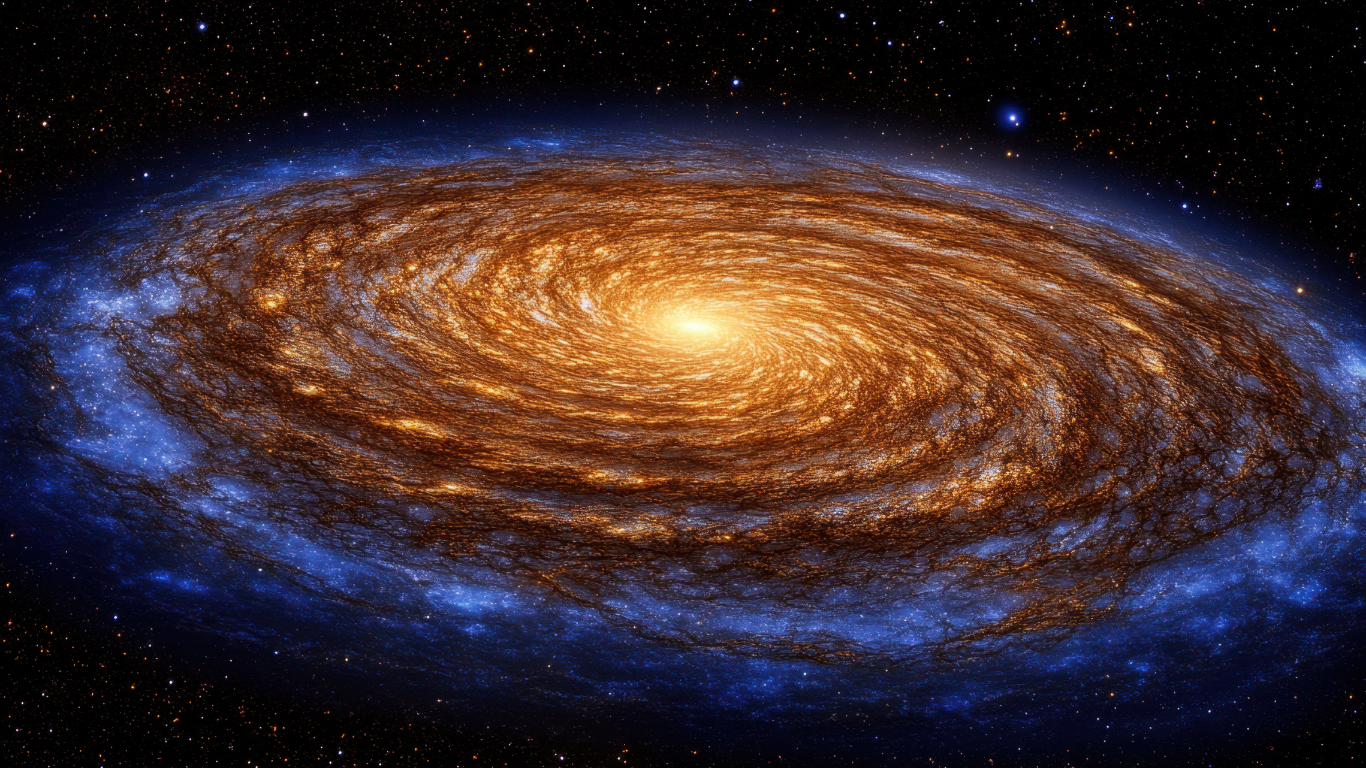
Sounds from Space
NASA recordings of planetary electromagnetic emissions reveal patterns matching the JLPER sequence:
- The Sun emits patterns of 7 and 14 beats
- Saturn shows patterns in 3 sections — its assigned number is 3
- Jupiter's pitch frequencies sum to 12 — its assigned number
- The Rosetta spacecraft recording of Comet 67P reveals the entire Tlahuitlayolleohuilli sequence
The cosmos literally sings the numbers of the theory.
25 Years of Cosmic Music
Since 1998, the JLPER Theory has inspired hundreds of musical compositions — symphonies, concertos, chamber works, and choral pieces — all drawing from the 25-note cosmic rows of the Tlahuitlayolleohuilli.
Works have been premiered internationally in Poland, Mexico, and the United States, including collaborations with NASA's Smithsonian project and recordings released worldwide through the NAXOS label.
The theory proves that music is not merely a human invention — it is the language of the cosmos itself, waiting to be heard by those who listen.